This modern form of archaeology, as a structured division of archaeology’s diversity, has gained many hasty titles. Among the more scholarly are names such as salvage or preventive archaeology. However, the most common are the colloquial terms rescue or crisis archaeology. All four names, in one manner or another, seem to express the urgency that underpins the nature of this type of excavation work.
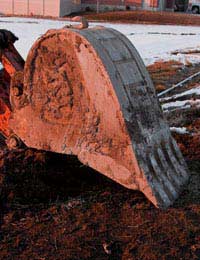
A composite of all of these names is sufficient to fashion the character of the effort. For example, take this situation. The archaeologist is interrupted by the news of the discovery of vital remains this minute exposed by a road works bulldozer. A bulldozer is not one of the archaeologist’s usual trade tools and its use on a delicate site can cause enormous, unrecoverable damage. The archaeologist has a crisis. He must prevent the loss of valuable remains by salvaging whatever artefacts are present and, if possible, rescue the site for further careful exploration at a later time.
All Under Your House
If an area seems attractive to build a city on today then the likelihood is that previous cultures thought the same. Archaeologically productive sites usually lie well concealed beneath existing settlements. A combination of archaeological survey and field walking, through a town or city, can produce a relatively well-detailed map of likely underground features of past settlement. The archaeologist’s problem, however, is how to dig under occupied houses, streets, factories, and shops.
Redevelopment and construction in these areas often requires the excavation of sub soils. The role of the rescue archaeologist is to rapidly carry out survey and excavation work in areas that are threatened by construction and other development where remains are uncovered or likely to be uncovered. This is archaeological crisis management and must be performed with pace as the wheels of the developer do not stop for long.
Rescue Regulations
Until recently, commercial developers paid little or no attention to the historical remains under their feet. Most countries today, require by law, some form of survey work to be performed pre-development and may even ask that a professional be present to observe the ground as heavy machinery moves or clears the area. To satisfy this legislation, commercial offices have emerged that offer archaeological services to the construction industry.
National and municipal laws have created a legitimate environment for the rescue archaeologist. Prior to any regulations the rescuer relied solely on the friendliness of the developer to gain access to and record the remains. No longer does this salvage expert need to literally jump into the jaws of the earthmover. Safety considerations are now carefully measured but like any rescue operation speed is the foremost characteristic of salvage archaeology.
Rapid Recovery
Once news is learned of a find, archaeologists need to rapidly gather together to outwork their plan as quickly and as expeditiously as possible. Clusters of amateur archaeologists from within the near geographical area will usually fill this role. Many trusts, societies, and volunteer groups have a mix of enthusiastic amateur and skilled professionals. Like the volunteer fire service they descend on the site with adrenalin driven anticipation of what they will encounter. An experienced archaeologist will direct the team.
The Process
After a quick liaison with the developer and construction staff, the director ascertains the limits of both time and permitted area, and the visual survey work can commence. This might involve note taking, photographs, quick sketches, and rudimentary measuring.
Small finds will be noted and removed whereas bulky remains such as wall features, roads, large pillars or gateways will be left in situ and the site director will attempt to negotiate the best possible outcome for their fate.
A good outcome for archaeology is when the developer permits the site to be extensively researched by traditional archaeological methods. However, the moment this occurs it is no longer rescue archaeology.
Frequently, there are only hours to excavate a site before the machinery must move on. Unlike conventional diggers the rescue field worker will, by design, be less careful when digging. Pick, shovel, and prising bar replace the usual trowel, dental tools, and brushes.
It is now understood and accepted in academic centres that rescue archaeology is an important training ground for the professional to ‘cut his teeth’. In fact, many professionals have chosen to remain specialising in the thrill of rescue archaeology.